AI assists, humans lead. Pre-visualization, temp voice lines, fast editing experiments — all accelerated by AI.
Directors test ideas faster without replacing the artists who bring them to life. Human creativity still drives every project.
How artificial intelligence is reshaping storytelling, production pipelines, and creative jobs in the animation industry — from 2027 to 2036.
Researcher

Researcher

Interview Coordinator
Website Development
Design
AI assists, humans lead. Pre-visualization, temp voice lines, fast editing experiments — all accelerated by AI.
Directors test ideas faster without replacing the artists who bring them to life. Human creativity still drives every project.
AI is already embedded across animation workflows — accelerating pre-viz, automating rendering, compressing timelines.
Studios experiment cautiously: AI handles the scaffolding, humans define the vision. Faster iteration, but no wholesale replacement of artists yet.
"I could see AI being useful for pre-visualization… blocked out in 3D really quickly… AI-generated audio where you just type it out. Things like that could help mitigate the speed at which you're visualizing stuff."— Justin Marmulak, Production Coordinator · Netflix Animation
Studios deploy AI primarily as a cost-cutting measure, reducing entry-level animation jobs before the tools are mature enough to maintain quality.
Younger creators risk becoming over-reliant on AI, weakening foundational animation skills industry-wide.
The race to cut costs outpaces the technology's readiness — resulting in lower quality output, frustrated artists, and audiences who notice the difference.
"People want to see themselves in the art."— Justin Marmulak, Production Coordinator · Netflix Animation
AI becomes a powerful analytical partner — evaluating scripts, suggesting cinematography, simulating audience reactions. Creative directors remain firmly in charge.
Animation teams work faster with greater confidence. AI handles hours of repetitive rendering that once consumed human energy and budget.
"The repetitive tasks of rendering and seeing what it looks like, and then tweaking and rendering — that all takes time and human hours. I can see stuff like that kind of being washed away."— Justin Marmulak, Production Coordinator · Netflix Animation
By 2031, most studios have standardized on AI-assisted pipelines for rendering, compositing, and scheduling.
The question is no longer whether to adopt AI — it's how to maintain creative authenticity while doing so.
Luminate Intelligence's 2025 special report on AI's impact across animation studios.
Open Report ↗Studios automate increasing portions of the pipeline, reducing technical roles in rendering, editing, and scheduling.
Creative decisions begin deferring to data-driven AI suggestions, narrowing the scope for bold artistic choices.
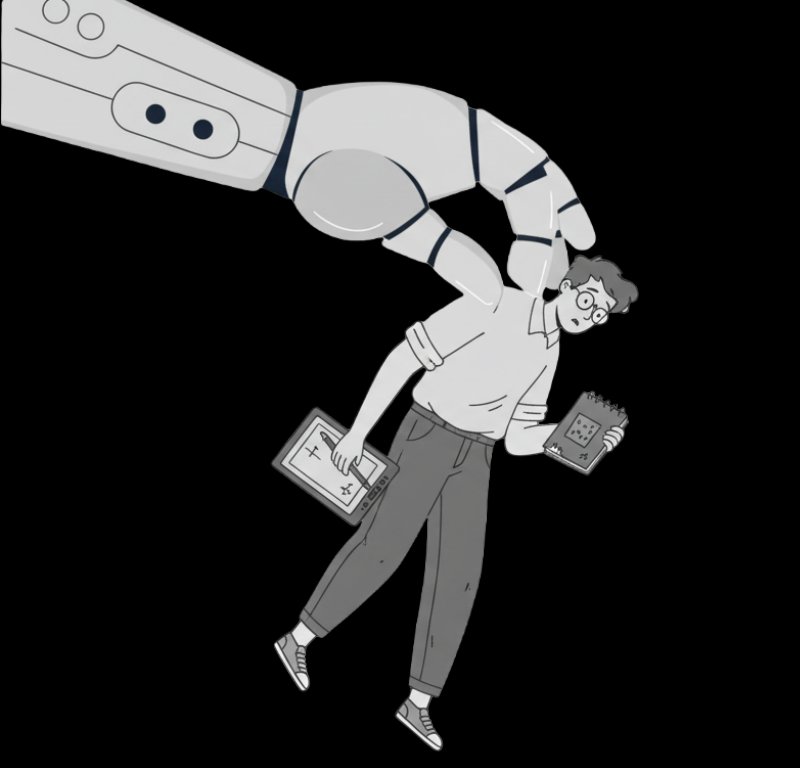
AI dramatically speeds up rendering, VFX, and scene visualization. Independent creators gain studio-quality tools with small teams.
But audiences increasingly seek hand-crafted work that reflects human perspective and identity.
"I firmly believe that when we see Disney making AI-driven movies versus people on YouTube making hand-drawn animation — people are going to prefer the other. People want to see themselves in the art."— Justin Marmulak, Production Coordinator · Netflix Animation
The global market for generative AI in animation explodes past $100 billion. Studios that invested early in human-AI hybrid workflows lead the industry.
The tools are industry-standard. The competitive edge belongs to the most creatively ambitious humans.
AI in motion graphics and animation is on a trajectory to reshape the entire industry by 2036.
Read Report ↗Major studios control the most powerful proprietary AI tools, concentrating creative and economic power in a handful of corporations.
Films optimized for AI efficiency metrics rather than emotional resonance. Audiences sense something missing. A cultural backlash builds.
"People are going to prefer the other. People want to see themselves in the art."— Justin Marmulak · In the pessimistic scenario, studios ignore this.
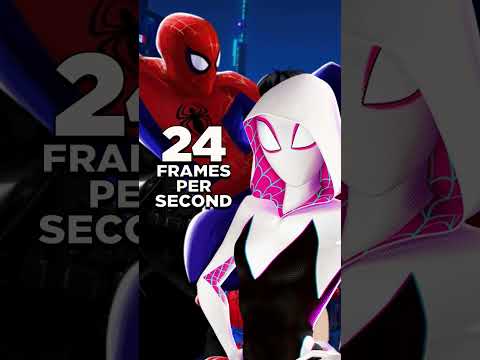
While AI can optimize rendering and generate perfectly smooth 24fps sequences,
"sometimes 12fps is the human experience because you're seeing the decisions”, as Justin pointed out.
In Spider-Verse, Miles Morales starts choppy, that roughness isn't a bug. It's the soul.
Human animators use "imperfection" to reflect human experience. AI tends to overlook the emotional truth in clumsiness, roughness, and rawness.
When AI handles the method, "why" becomes everything.
"People want to see themselves in the art."— Justin Marmulak, Netflix Animation
Example: 12fps hand-drawn animation; human decision

Production Coordinator · Netflix Animation Studios
linkedin.com/in/justinmarmulak ↗Production Coordinator, Netflix Animation — Conference Co-Chair, Spark Animation.
Justin navigates the intersection of creative leadership and production operations at Netflix Animation. Rooted in an "artist-first" philosophy, he oversees complex workflows and serves as a leadership figure in the industry.
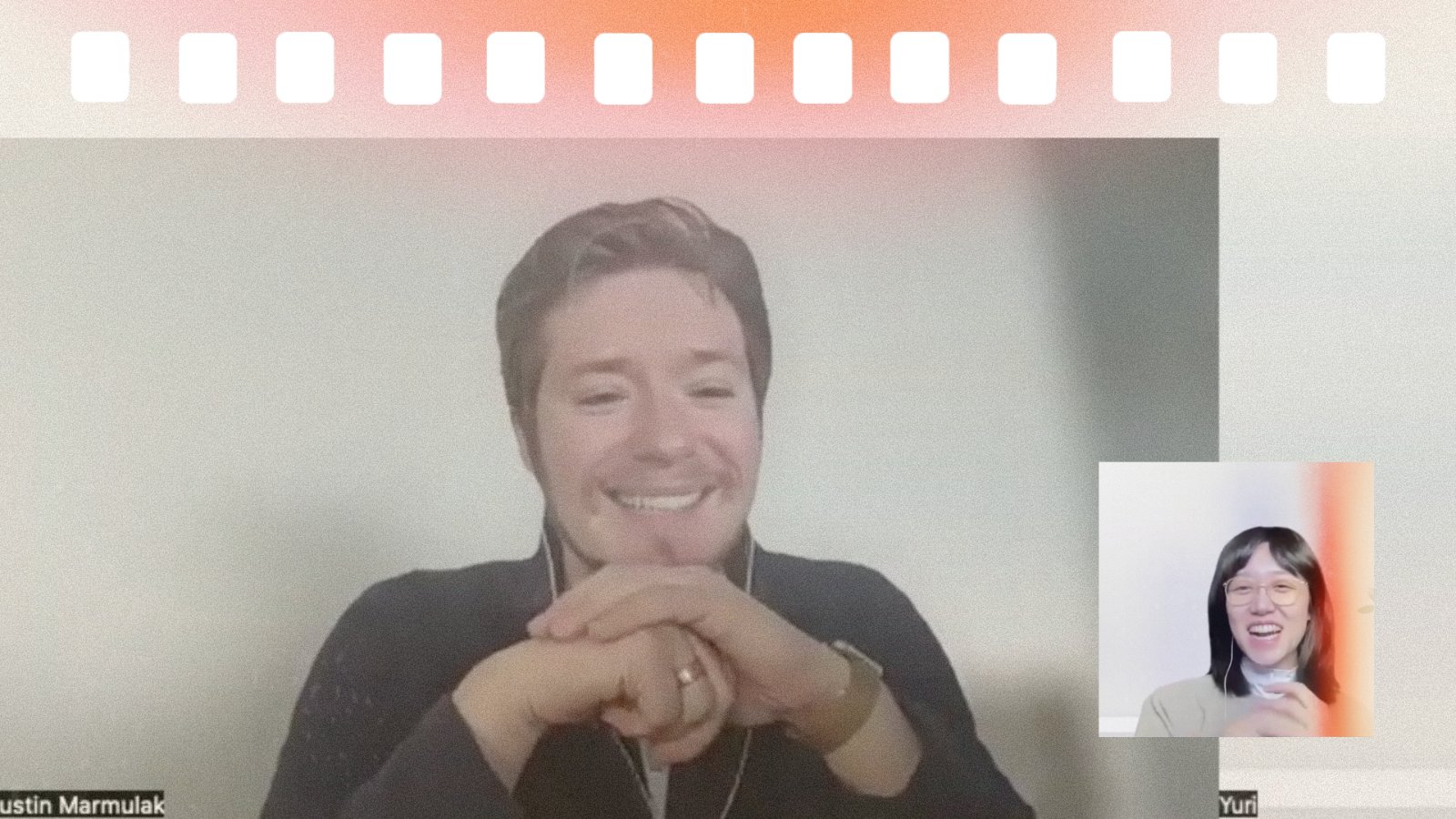
Co-Chair of the Spark Animation Conference — where team member Yuri first connected with him. A vocal advocate for the human touch in storytelling.
"People want to see themselves in the art."
In this interview, Justin reflects on how AI tools are already influencing production timelines at Netflix Animation — from pre-visualization to rendering — and shares his prediction that audiences will ultimately gravitate toward animation made with genuine human vision, even as AI-generated content scales.
Read the Interview Transcript ↗Skip the 25-min video — the AI transcript summary on Otter.ai gives you the key insights in minutes.
"People are going to prefer the other. People want to see themselves in the art."— Justin Marmulak, Production Coordinator · Netflix Animation Studios
Justin's outlook on AI in animation — from today through 2030+
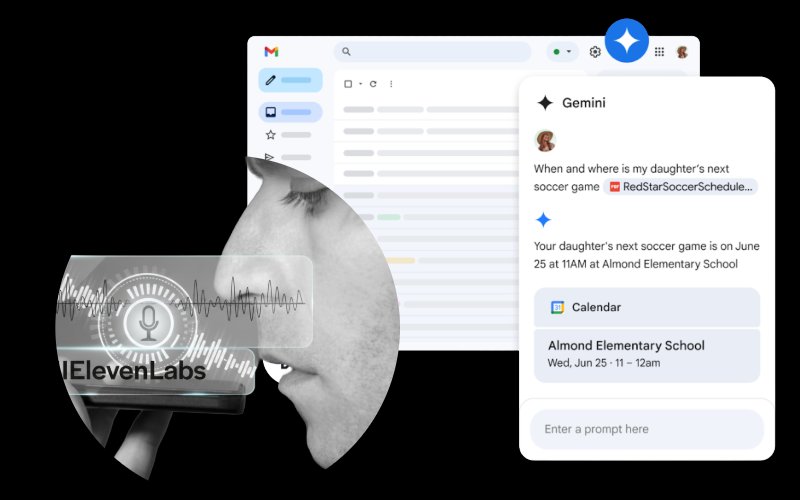
Utilizing AI (Gemini / G Suite) for administrative automation like meeting summaries and email organization.
Predicting AI use in pre-visualization and temporary audio generation to speed up the iterative process.
AI as a sophisticated "AB testing" tool for cinematography and lighting, while creative leadership remains human-led.
High-end studios like Netflix prioritize auteurs and organic skills to create lasting, emotionally resonant properties.